
Introduction to Embedded Systems
Table of Contents
Embedded Systems Product Development are specialized computing systems designed to perform dedicated functions within larger mechanical or electrical systems. Unlike general-purpose computers, which can run various applications, embedded systems are tailored for specific tasks, often with real-time constraints. These systems are ubiquitous in modern life, found in everything from household appliances and medical devices to automotive control systems and industrial machinery.
The development of embedded systems involves a unique set of challenges and considerations, including hardware-software co-design, power efficiency, real-time performance, and reliability. Successful product development requires a structured approach, combining engineering expertise with rigorous testing and validation.
Key Components of Embedded Systems
Embedded systems typically consist of three primary components:
1. Hardware – The physical elements, including microcontrollers, sensors, actuators, and communication interfaces.
2. Firmware – The low-level software that directly controls the hardware, often written in C or C++.
3. Application Software – Higher-level programs that define the system’s behavior and user interactions.
Each component must be carefully designed to ensure seamless integration and optimal performance.
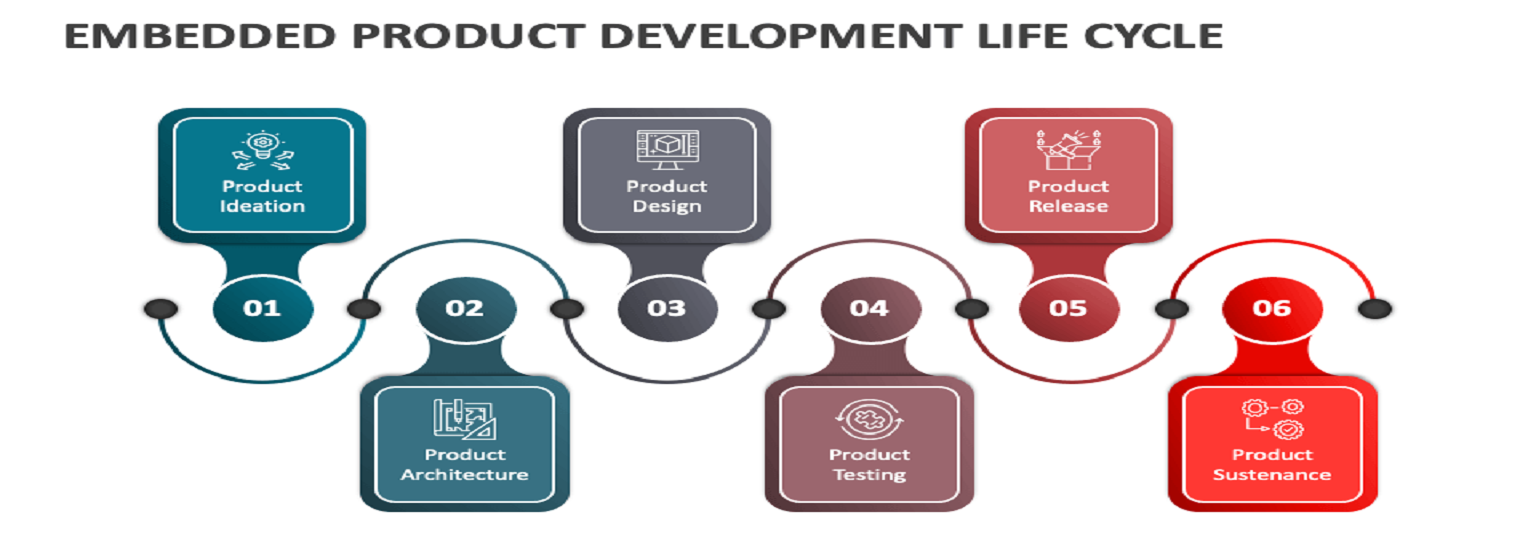
Embedded Systems Development Lifecycle
Developing an embedded system product follows a structured lifecycle to ensure functionality, reliability, and scalability.
1. Requirements Analysis The first step involves defining the system’s purpose, performance expectations, and constraints. Engineers collaborate with stakeholders to outline functional and non-functional requirements, such as power consumption, processing speed, and environmental conditions.
2. System Design Once requirements are established, the system architecture is designed. This includes selecting appropriate hardware components, defining communication protocols, and planning the software structure. Hardware-software trade-offs are evaluated to optimize cost and performance.
3. Hardware Development The hardware phase involves designing and prototyping the physical components. Engineers create schematics, design printed circuit boards (PCBs), and select microcontrollers or processors. Simulation tools help verify design correctness before manufacturing.
4. Firmware and Software Development With the hardware in place, developers write and optimize firmware to interact with the hardware efficiently. Real-time operating systems (RTOS) may be used to manage tasks and resources. Application software is developed to provide user interfaces and higher-level functionality.
5. Integration and Testing The hardware and software components are combined, and the system undergoes rigorous testing. Functional testing ensures all features work as intended, while stress testing evaluates performance under extreme conditions. Debugging tools and emulators help identify and resolve issues.
6. Deployment and Maintenance Once validated, the product is deployed for mass production. Post-deployment, continuous monitoring and firmware updates may be necessary to address bugs, improve performance, or add new features.
Challenges in Embedded Systems Development
Despite careful planning, embedded product development presents several challenges:
Power Consumption Optimization – Many embedded systems operate on limited power sources, requiring energy-efficient designs.
Real-Time Performance – Systems must respond to inputs within strict time constraints, necessitating precise scheduling and task prioritization.
Security Concerns – As embedded devices become more connected, protecting against cyber threats is critical.
Hardware-Software Co-Design – Balancing hardware capabilities with software requirements is complex, often requiring iterative refinement.
Future Trends in Embedded Systems
Advancements in artificial intelligence, the Internet of Things (IoT), and edge computing are transforming embedded systems. AI-enabled embedded devices can perform real-time data processing, while IoT connectivity allows for remote monitoring and control. Additionally, edge computing reduces latency by processing data locally rather than relying on cloud servers.
the process of creating specialized, intelligent electronic systems like those in smart home devices or industrial control units by integrating hardware and software to perform specific, autonomous functions. The process involves several stages, including planning and analysis of requirements, designing the hardware and software architecture, implementation and prototyping, and finally, testing and commercial launch. Key considerations throughout are real-time performance, memory constraints, power consumption, and security, all essential for creating reliable and efficient products across various industries.
Conclusion
Embedded systems product development is a multidisciplinary process that demands expertise in hardware, software, and systems engineering. By following a structured development lifecycle and addressing key challenges, engineers can create efficient, reliable, and scalable embedded solutions. As technology evolves, embedded systems will continue to play a pivotal role in shaping the future of smart devices and automation.